

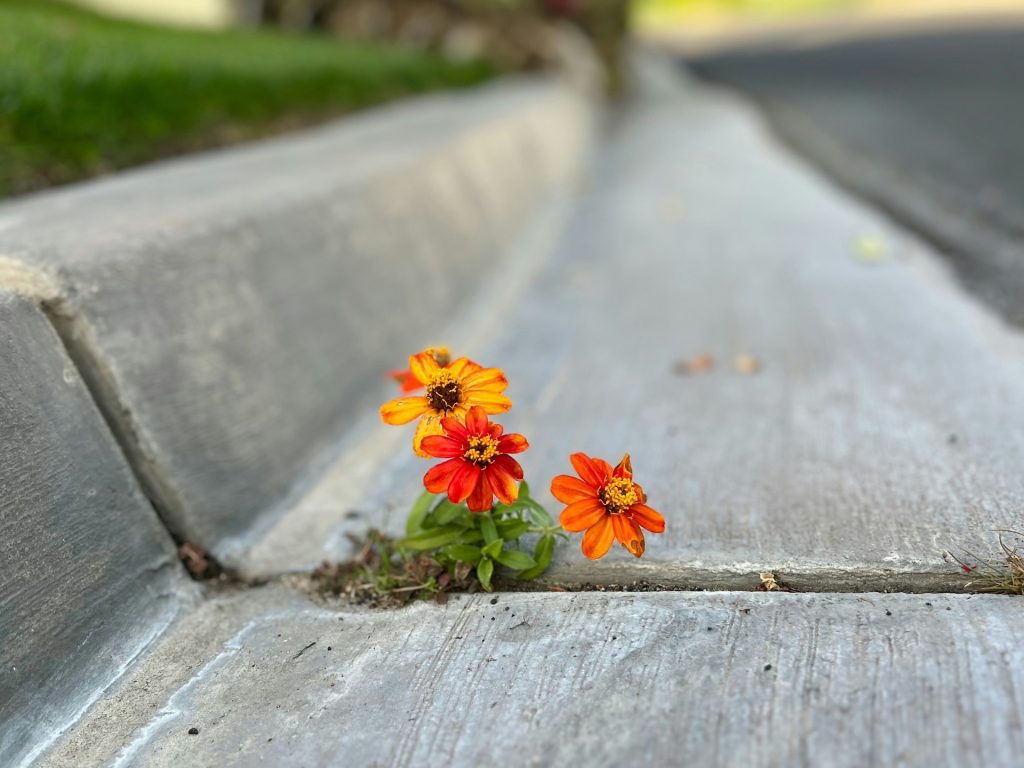
 This month’s buzz word is “resilience”. It’s everywhere.
Resilience by one dictionary’s definition is: The ability to recover quickly from difficulties, adapt to stress or trauma, and bounce back to a healthy state.
That’s such an important and necessary quality to have in this uncertain world that it’s strange to see or hear people talking about. Surely, it’s just accepted as is? Do we really need a reminder.
Well, according to our leaders, we do. And they’ve been at some pains to remind us of that. Personally, I’ve been a little surprised by the emphasis. Some people might even argue that there’s recently been an almost active determination to encourage us to be less resilient rather than more so.
It seems like now’s a good moment to do my own bit of reflection on it.
At one time, as I’ve mentioned, the word wasn’t so much in use because there didn’t seem to be so much of a need to spell it. We in the UK were expected to have such a quality but not necessarily to know that there was a name attached to that quality. We were just told to “get on with it” and that was that.
Now, I’m not saying that is either kind or a good idea. People have been cruel and thoughtless when not considering others and just “getting on with it”. Imagine, for example, a child falling over and beginning to cry. The child would have looked to the adult for comfort. The “old” way of dealing with the poor little mite might have been a brusque and cursory examination of the problem and the child being told: “Nothing to see here” or the equivalent.
With persistent treatment of that sort, the child would learn there was no point in complaining or playing it for all it was worth. There was no sympathy – or, better still, empathy – to be had so just getting on with it was because there was no alternative. It wasn’t a choice and it didn’t half make you sit on your feelings. I recall such days well.
In recent years, we’ve seen a societal change where we are allowed to not only have feelings but to air them. And, on the whole, I think that’s a good thing. Wouldn’t this be a sad old world if we operated only through rational thought and behaviour. We’d only be half the people we should be?
The problem might be, as far as government ministers are concerned, is that our feelings are getting in the way of living a full life – and that includes work – hence the need to remind us of that resilient word.

A modern-day Sisyphus recreates the ultimate rolling-the-rock-uphill resilience story. Not that he had much choice.
What is the opposite of resilience, I wonder. I have to look it up. Words that come up frequently include fragility, vulnerability and, on occasion, despondency.
Fragility and vulnerability have a reasonable ring to them. Being seen as fragile – particularly if you are female – has quite a nice ring to it. It has a certain charm.
Vulnerability, too, has an appeal. It implies a deeper level of emotion perhaps than the average Englishman or woman might once have had. It could even indicate preciousness, but in a good way.
The last one, despondency, is more difficult to define. I imagine it’s more of a term that might describe an internal but hopefully transitory process. Even so, I’m not sure I’d be inclined to ever admitting to being filled with despondency. I get the sense that it’s the equivalent of garlic to Dracula. To be avoided, in case it’s catching.
Put like that, it becomes easier to see why resilience could be enjoying a surge in popularity. If the opposite is despondency, then we should probably all be looking for a way up, in a positive sense.
As a counsellor, I will often meet a client who is finding life difficult and struggling when times are hard and they’re struggling. As I see it, my work with them is to try and help them find some way of turning around what might initially appear to be an insoluble problem. The process is one of discovery about the client at a very basic level and then gradually building on that to find ways and ideas that fit best with the individual and to build on that. It could be argued that that’s a bit simplistic. In fact, it’s a lot more complicated than it sounds. And it requires a lot of trust on both sides.
So, can a nationwide campaign to improve resilience really work? In my opinion, I think it’s an idea worth looking at but it is all about trust. The trend in recent years is to put more emphasis on our feelings and to interpret how best we can use them for the good of society and now it’s being suggested that we put them to one side again and just “get on with it”. I’m slightly confused. How can I trust my leaders (of any political persuasion) when they keep changing their minds?
I don’t see any easy answer and I wonder if the change in direction is connected with the harder political and economic times we seem to be facing. If you are someone who lets your heart rule your head, you may be in for a disappointment whereas if you head – with its focus on resilience – takes the lead, then you may find yourself better equipped emotionally to deal with these difficult times than your perhaps more vulnerable friend. Just a thought.
Like all discussions, I find it helpful to end on a positive note.
All over the world, there are women – men too, I imagine – of a certain generation who spring into action when they hear the opening bars of Gloria Gaynor’s disco classic “I will survive”.
If you want a lesson in resilience, pay attention to the lyrics. They should be required listening for all doubters. And if that doesn’t make you get up and dance, nothing will.