

 Well, here we are. Who’d have thought it? Certainly not the doom-mongers who are always talking us down. Nor me, I’m used to having very few expectations of them. And yet England has gone and done it. England beat Mexico in its own stadium where the team are never beaten. England won despite excessive heat, potential altitude sickness and some Mexico fans literally beating drums and letting off fireworks outside the England team’s hotel ahead of the match. And still they won.
“If at first you don’t succeed try, try again” King Robert the Bruce of Scotland allegedly said as he hid in a cave watching a spider failing to build a web. Robert was in hiding because he’d lost yet another battle against the English. But, as he watched, the spider kept weaving its magic until it finally spun its web. Despite the setbacks, it had continued with its work until it had completed its home. What an achievement.
The King took that lesson with him even after he left the cave and went on to face more battles with the English. Eventually, he won.
That’s the folklore anyway and it’s left us with a saying that most of us will have learned as children. It came back to me last month as I attended a First Communion for a little eight-year-old. It was the first one I’d been to and I wasn’t sure what to expect. Fortunately, the children did so it was helpful to be led by them.
It was enchanting if a little surreal to see the darling little girls all wearing their beautiful long white frocks. Some even had short white vails which took the unaware a little aback.
A friend who came as a family guest was curious about the dress code. “Brides of Christ I imagine”, as I whispered back. He raised an eyebrow. The little boys, too, looked angelic in their waistcoats and bow ties contrasted so well with (one or two of their) devilish behaviour. It was a combination of children at their most natural and at their best behaved. I loved it.
The service was 90-minutes and I’m not that great at anything over an hour. And it was the second-hottest day ever, and the church was a modern one, with no air-con so we sweltered. We started off with enthusiastic clapping and then, bit by bit, the enthusiasm faltered.
But not from the children who were enraptured at their part in this high church event. True, the organisers had ensured the little darlings were kept occupied throughout the service with various manoeuvres to keep them concentrating and avoid boredom, but even so. I’m not sure I could have managed it.
Despite my best efforts, my attention did wander and my thoughts flitted all over the place. Most were inconsequential but the odd curious thought popped up. For example, what happened, I wondered, to change these little people from the enthusiastic collegiate and collective members of society they were at this moment, into larger people who adopted the individual-at-all-costs mantle as they moved towards early adulthood and beyond?
Could it be that, being herd animals first and foremost, we work well in a group and respond to encouragement? Little people tend to look at getting their needs met and, if they are loved and applauded, they aim to please and enjoy the rewards. Trying to please and being recognised and being congratulated for your efforts is surely very rewarding. I know I like praise.
The trouble is that it’s harder to get as you grow up and there can’t be much worse than an adult jumping up and down, saying: “Look at me, look at me! Aren’t I clever.”
And then there’s the in-between stage. The stage that moves from enchanting people-pleasers under 10 into the potentially surly hormone changing pre-and on-the-cusp adolescence. Some make the transition with ease – and good luck to them because life might be rather more fun in their case – but, for the majority, it’s a bit of a trickier time.
Could this be the problem? And, if so, how do we try to manage the transition between willing child, awkward adolescent and fully functioning adult human?
A week or so ago, I was still pondering. But then came the England triumph in the World Cup, followed by my lightbulb moment when I realised how it can be done.
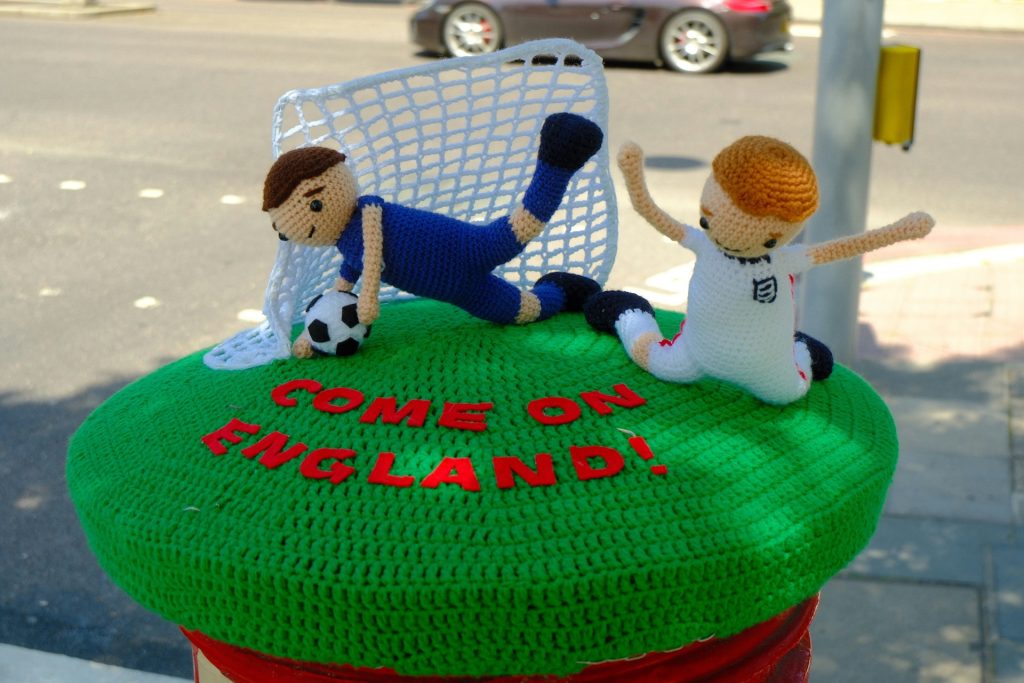
I’ve decided that what everyone needs is a Thomas Tuchell (England coach) figure in our life who believes in us, who can see our potential and help us to believe in ourselves and turn it around. And not just as individuals but as part of a team competing in the tournament of life. We need someone who, when we’re at our lowest ebb, will tell us to get up and keep trying and that failure is not an option.
And even when we feel we can’t breathe, move a muscle and have been told we’ve got 11 minutes of extra time, we do it because we want to show the people who believe in us that we can. We want them to be as proud of us as we are of ourselves. Just imagine how all the members of that team feel. They gave it their all, and more. Wow, what a result!
And this, in a nutshell, is what that match has taught me. The impossible can still be done. Remember that next time you’re told something different. Believe it.